v. Chr.
Approx. 5000: First settlement of the island by Indians from South America. A.D.
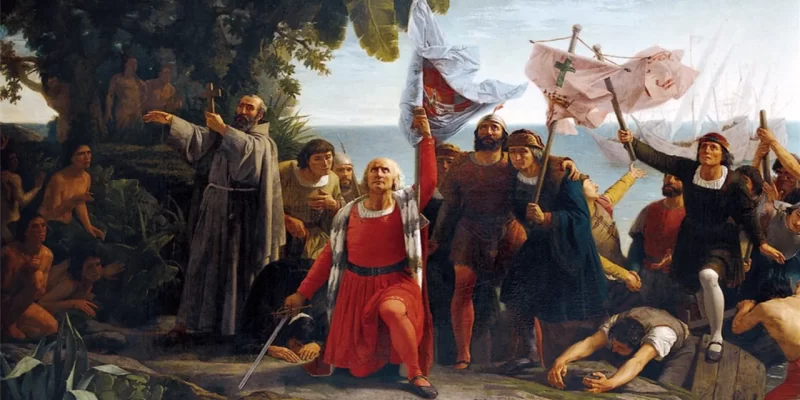
1492: Discovery of Cuba by Christopher Columbus.
1510: Beginning of the colonization of Cuba by the Spanish Crown.
1511-1514: Founding of the first seven settlements (Baracoa, Bayamo, Trinidad, San Cristobal de La Habana, Santi Spiritus, Santa Maria del Puerto del Principe (Camagüey) and Santiago de Cuba. Mid-16th century: The original inhabitants of the island are almost exterminated, so the slave trade from Africa begins 1628: The Dutch pirate Piet Heyn attacks the so-called Spanish Silver Float in the Bay of Matanzas and loots treasures worth 12 million guilders.
1820: Cuba becomes the world's largest sugar exporter.
1868-1878 Outbreak of the First War of Independence (the 10-year war)
1895-1898: Start of the Second War of Independence 1898: Interference from the USA in the war, hoping to wrest Cuba from the Spanish. The reason for this was the explosion of the ship Mine in Havana's port.
1899: Beginning of the first US intervention. After 4 centuries, the Spanish colonial power leaves the Cuban territory.
1902: US troops leave Cuba except for the military base at Guantanamo.
Republican period. Cubans call it the semi-independence period. From 1914: Cuba experienced an economic boom because sugar became very scarce due to the First World War.
1940: Fulgencio Batista becomes President of the Republic of Cuba.
1952: The corrupt Fulgencio Batista comes to power in a coup d'état.
1953: Storming of the Moncada barracks in Santiago de Cuba by a group of young rebels led by Fidel Castro. The assault fails and Fidel is arrested.
1955: After his imprisonment, Fidel Castro trains a guerrilla group in Mexico.
1956: Fidel Castro, Raul Castro, Ernesto Che Gevara and a total of 82 comrades arrive from Mexico on the motor yacht Granma to start a guerrilla war.
1959 Victory of the Cuban Revolution. The first agrarian reform is introduced. Expropriation of over 400 large landowners.
1960: Nationalization of major US companies (oil refineries, telephone and electricity companies, etc.). Beginning of the US economic blockade against Cuba.
1961: Bay of Pigs Innovation. After the first attacks, Fidel Castro explains the socialist character of the Cuban revolution in Havana. Elimination of illiteracy.
1962 October Crisis. The then USSR had supplied Cuba with missiles aimed at the United States. That is why the USA under President Kennedy blocked the island with warships. Then the Soviet Union, under Nikita Khrushchev, gave in and withdrew the missiles.
1963: The 2nd Agrarian Reform Act is passed, banning private land ownership over 67 hectares. The rest of the lands were expropriated and nationalized.
1965: Che Guevara leaves Cuba to fight in Bolivia, where he is assassinated in 1967. Foundation of the Communist Party of Cuba (PCC).
1976: New constitution and division of Cuba into 14 provinces.
1980: Opening of tourism from the West.
From 1989: Beginning of the so-called “Special Period” (Periodo Especial), when the socialist bloc in Europe disintegrated. This brought Cuba great significant economic problems, which led to one of the biggest economic crises in Cuba.
1993: Legalization of foreign currency holdings for all Cubans and opening of many US stores to alleviate the severe economic crisis.
1998: Pope John Paul II visits. 2006 Raul Castro takes power because of his brother Fidel Castro's illness. 2008 Raul Castro is elected President of the country. The province of Havana is divided into two provinces: Artemisa and Mayabeque. At that time there were two provinces with the name of Havana: Ciudad de la Habana (City of Havana) as the capital and the province of La Habana (Havana). Then the capital takes over the name Havana again. Cuba now consists of 15 provinces. 2012 Pope Benedict XVI visits Cuba. 2014 Beginning of an improvement in relations between Cuba and the United States. Exchange of prisoners between the two governments. 2016: Visit by US President Barack Obama. No US President had visited Cuba in almost 90 years. Fidel Castro dies on November 25 at the age of 90. His national mourning lasted 9 days. 2019 Miguel Diaz-Caner Bermudez is elected President of the Republic. Raul Castro remains as the first secretary of the PCC. 2020 On March 11, the first Corona cases appear in Cuba. Holidays January 1st: Anniversary of the Victory of the Cuban Revolution (1959) April: Good Friday May 1st: International Workers' Day 25th-27th July: anniversary of the attack on the “Moncada” barracks in Santiago de Cuba (1953) October 10: beginning of the 1st War of Independence (“the 10-year war”) (1868-1898) December 25: Christmas Day (from 1998 after the visit of Pope John Paul II.)